
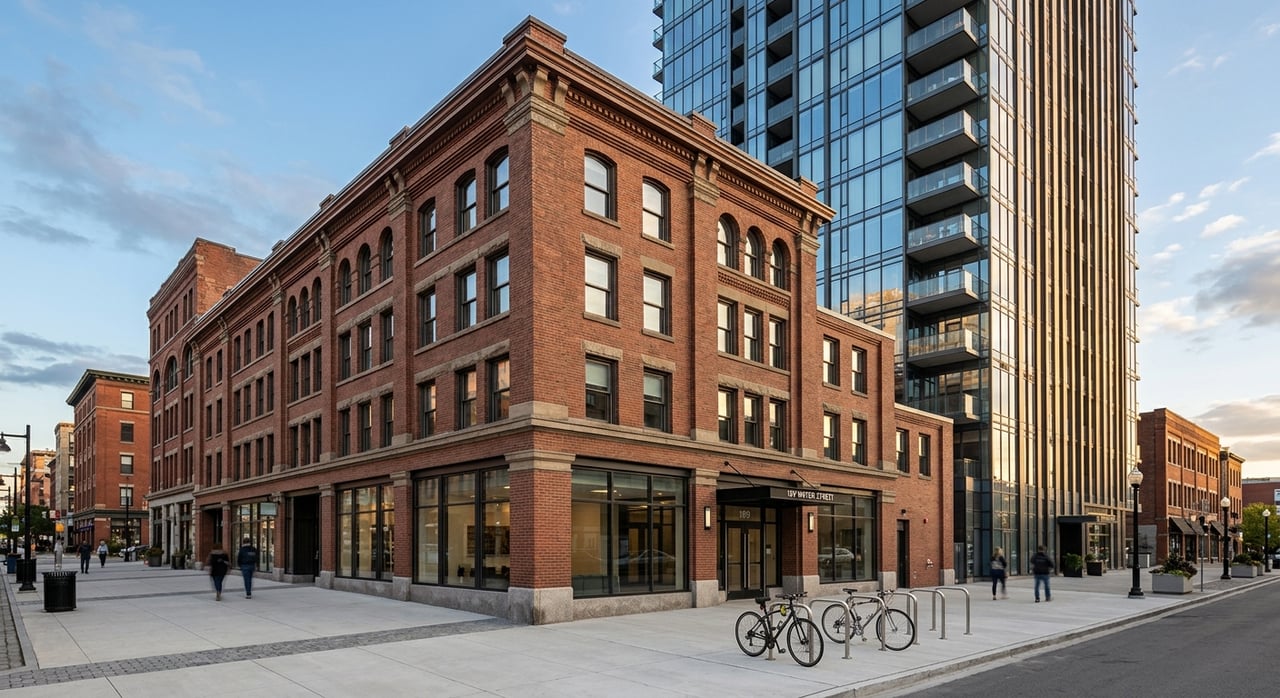
If you want Boston city living without the cost, stress, and parking hunt that come with owning a car, the Seaport District deserves a close look. You may be wondering whether car-free life here is truly practical or just convenient on paper. The good news is that Seaport offers a layered mix of transit, ferry service, bike access, walkable streets, and everyday essentials that can make low-car living realistic for many renters and buyers. Let’s take a closer look.
Why Seaport works car-free
The Seaport stands out because it does not rely on just one way to get around. Instead, you have several overlapping options, including the MBTA Silver Line, local bus routes, South Station connections, Bluebikes, ferry service, and waterfront walking routes.
That matters in real life. If one option is less convenient on a given day, you still have another way to get where you need to go. For many people, that flexibility is what makes a low-car lifestyle feel manageable instead of limiting.
Silver Line and South Station access
The MBTA Silver Line Waterfront is a major part of the Seaport’s transit backbone. According to Seaport TMA, the SL1, SL2, and SL3 serve South Station, Courthouse Station, World Trade Center Station, and Silver Line Way, giving you direct access through key parts of the district.
For commuting and city connections, South Station is a major advantage. Inbound Silver Line service links you to the Red Line, Commuter Rail, Amtrak, and regional buses there, which expands your options well beyond the neighborhood itself.
This setup can make Seaport especially appealing if you work downtown, commute regionally, or want easy access to other parts of Greater Boston. In practical terms, living near the Silver Line or South Station can save you time and reduce the need for a car in your weekly routine.
Bus routes add flexibility
Beyond the Silver Line, Seaport TMA lists bus routes 4, 7, 9, 11, and 47 as options serving the Seaport and South Boston area. Route 7 also runs along Summer Street Monday through Saturday.
These routes help fill in gaps for shorter trips and alternate commutes. They also give you backup options when weather, schedules, or personal preference make walking or biking less appealing.
Airport access is unusually easy
One of the strongest arguments for living car-free in Seaport is how simple airport access can be. Seaport TMA notes that the SL1 runs between South Station and Logan Airport seven days a week.
Massport also states that Logan can be reached by the Blue Line, Silver Line, or Water Ferry. If you travel often for work or personal trips, that kind of direct airport access can make a noticeable difference in your day-to-day convenience.
Instead of planning for parking, long rides, or expensive last-minute trips to the airport, you have more than one built-in option. For many city residents, that is a major quality-of-life perk.
Ferry service adds a helpful weekday option
The Seaport Ferry is one of the neighborhood’s more unique transportation tools. The operator says it runs Monday through Friday during morning and evening commute periods, is open to the public, and costs $5 each way.
Its North Station route serves Lovejoy Wharf, Fan Pier, and Pier 10, while its East Boston route serves Lewis Mall Wharf and Fan Pier. Boston.gov also announced that the Pier 10 commuter ferry operates year-round on weekday commute periods to improve access to the South Boston Waterfront.
For the right schedule, this can be a great commuting option. It adds another layer to Seaport’s overall mobility, especially if you want an alternative to busier land routes.
The ferry has limits
It is important to keep expectations realistic. The Seaport Ferry does not run on weekends or holidays, so it works best as a weekday commute tool rather than an all-purpose transportation solution.
That does not weaken the case for car-free living, but it does shape how you should think about it. In Seaport, the most practical low-car lifestyle comes from combining several options rather than depending on one service alone.
Walking and biking keep daily trips simple
Seaport is becoming easier to navigate on foot and by bike thanks to street redesigns focused on short trips and safer movement. Boston’s transportation department says Summer Street has kept protected bike facilities and pedestrian safety changes after the pilot, improving the bike connection between South Boston and Downtown.
On Congress Street, Sleeper Street, and A Street, final designs include wider sidewalks, separated and protected bike lanes, raised crosswalks, curb extensions, bike racks, and benches. Those details matter because they support the kind of daily routine that makes car-free life easier, from a quick grocery run to a ride to South Station.
If you are choosing a home with a low-car lifestyle in mind, these street improvements can be just as important as commute time. A comfortable sidewalk, safer crossing, or better bike lane often makes the difference between driving and simply heading out the door.
Bluebikes supports short trips
Bluebikes is another key part of the Seaport transportation mix. Boston.gov says Bluebikes has more than 5,300 bikes and 550 stations across Metro Boston.
Seaport TMA lists more than a dozen Bluebikes stations in the district, including South Station, Fan Pier, Seaport Square, Pier 4 Boulevard, the BCEC, and several points along Congress Street and Seaport Boulevard. That network gives you a practical way to cover short distances without needing your own bike.
Seaport TMA also notes that cargo-bike share is available in the district for heavier errands. For residents trying to reduce car use, that can be a helpful option for more than just commuting.
Everyday errands are within reach
A car-free lifestyle only works if the basics are easy to handle. In Seaport, grocery shopping, fitness, dining, and outdoor time are all part of the neighborhood routine.
Trader Joe’s Fort Point Seaport at 44 Thomson Place is a clear grocery anchor for the area. Trader Joe’s describes the store as offering everyday basics like milk, eggs, meat, bakery items, and fresh produce, which supports regular shopping without the need to drive.
For fitness, Wave Health & Fitness at Seaport Hotel offers a 24-hour gym, cardio and strength equipment, group classes, trainers, and short-term or daily access options. Equinox Seaport also offers group fitness classes and dedicated studios for yoga, Pilates, and cycling.
This matters because a low-car lifestyle is about more than commuting. When your grocery store, workout routine, and daily outings are close by, it becomes much easier to live without feeling tied to a vehicle.
The Harborwalk strengthens daily life
The Harborwalk is one of Seaport’s most useful lifestyle features for car-free residents. Boston.gov describes it as a citywide waterfront system of roughly 43 miles.
According to Seaport Hotel’s Harborwalk page, it connects waterfront neighborhoods and places visitors near parks, beaches, museums, restaurants, bars, public art, and attractions. In daily life, that can translate into easy walks, runs, coffee trips, and evening outings without getting behind the wheel.
If you value being able to step outside and move through the neighborhood on foot, the Harborwalk adds real day-to-day appeal. It supports both transportation and leisure, which is a big part of why Seaport feels livable without a car.
Where to focus your home search
If car-free or low-car living is your goal, location within the neighborhood matters. Based on the transit and street network described in the research, the strongest fit is usually a home near South Station, World Trade Center, Courthouse, Silver Line Way, Fan Pier, the Harborwalk, or the bike corridors along Summer Street and Congress Street.
The closer you are to several of those layers at once, the easier daily life tends to be. A short walk to transit, bike share, and waterfront paths can give you more flexibility than a location that depends on only one route or service.
For renters, that can mean a smoother daily routine and fewer transportation costs. For buyers, it can also mean choosing a home that better aligns with the way you want to live in Boston.
A realistic view of car-free life
The best way to describe Seaport is not that you will never need a car under any circumstances. It is that the neighborhood gives you a realistic chance to live with less dependence on one.
Weekdays are usually the strongest for car-free living here because the transit layers are deepest then. The ferry is weekday-only, Route 4 is peak-commute-only, and some trips may still be easier with a rideshare or a transfer through South Station.
Still, Seaport offers one of Boston’s more practical setups for low-car living because it combines multiple modes in one district. For many people, that combination is exactly what makes the neighborhood work.
If you are comparing rentals or condos in the Seaport and want a practical read on which locations support your commute and daily routine best, Downtown Boston Realty can help you narrow your search with local insight and a hands-on approach.
FAQs
Is the Seaport District in Boston good for living without a car?
- Yes. The Seaport has a layered transportation setup that includes the Silver Line, bus routes, South Station access, Bluebikes, ferry service, and walkable waterfront routes.
What public transit serves Boston’s Seaport District?
- Seaport TMA lists the Silver Line Waterfront routes SL1, SL2, and SL3, along with bus routes 4, 7, 9, 11, and 47 serving the Seaport and South Boston area.
Can you get to Logan Airport from the Seaport District without a car?
- Yes. Seaport TMA says the SL1 runs between South Station and Logan Airport seven days a week, and Massport also lists water transportation as an airport access option.
Does the Seaport Ferry run every day in Boston?
- No. The Seaport Ferry runs Monday through Friday during commute periods and does not run on weekends or holidays.
Is the Seaport District bike-friendly for daily errands?
- It can be. Boston’s street projects in the area include protected or separated bike lanes, wider sidewalks, raised crosswalks, bike racks, and other pedestrian-focused improvements.
Are groceries easy to access in Boston’s Seaport without a car?
- Yes. Trader Joe’s Fort Point Seaport at 44 Thomson Place offers everyday grocery basics, which supports regular shopping within the neighborhood.