
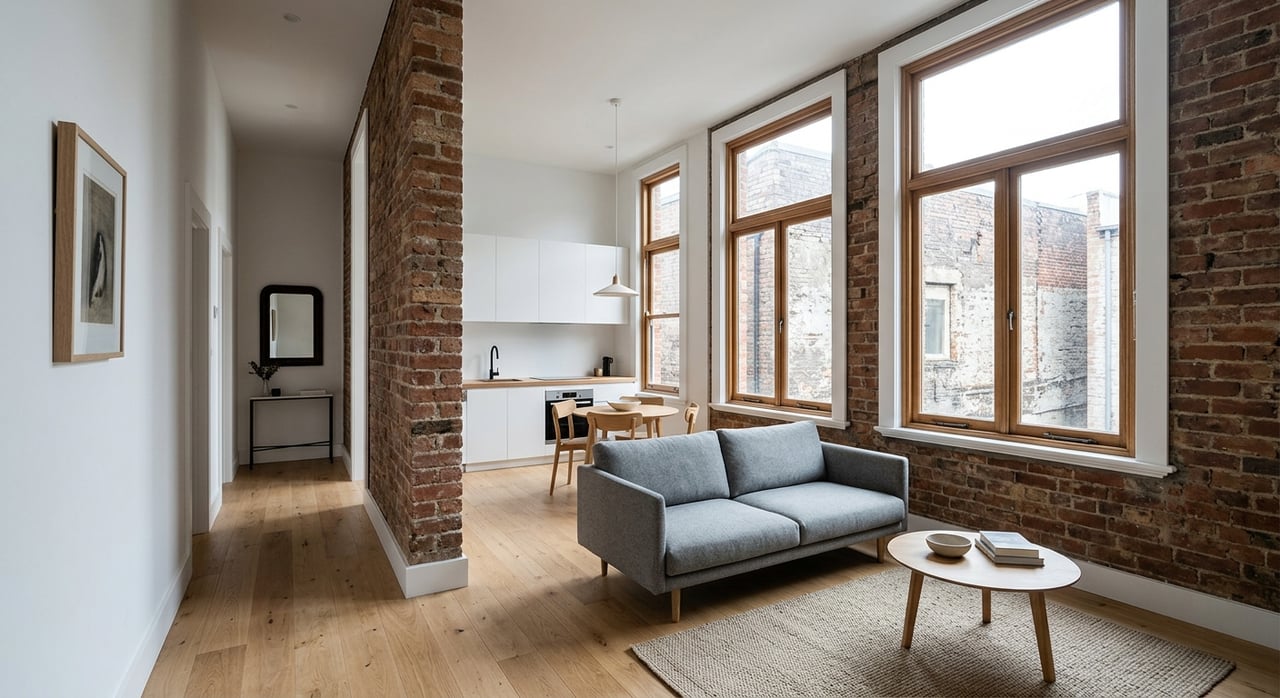
Apartment hunting in the North End can feel exciting and overwhelming at the same time. If this is your first rental search, you are probably trying to balance budget, timing, paperwork, and the reality of older Boston buildings that do not always work like newer apartments. The good news is that with the right plan, you can search smarter, avoid common surprises, and feel more confident when you sign a lease. Let’s dive in.
Why North End rentals feel different
The North End is one of Boston’s oldest and most visited neighborhoods, with narrow streets, historic buildings, restaurants, cafes, and access to waterfront recreation. It is also a heavily apartment-based area, with RentCafe reporting that about 80% of residents rent.
For first-time renters, that matters because the housing stock here often looks and functions differently than in newer parts of Boston. Many buildings are older and smaller, and RentCafe reports that 85% of rentals are in properties with fewer than 50 units. That can mean more charm, but it can also mean fewer standard amenities.
What to expect from North End buildings
A North End apartment may not check every box on your wish list. Boston University notes that in older Boston housing, you may find walk-up buildings without elevators, on-site laundry, or central air.
That does not mean a unit is not a great fit. It means you should tour with a practical mindset and pay close attention to how the space will work for your daily life, especially if this is your first time renting in Boston.
Common features to check
When you tour, look beyond the photos and focus on how the apartment actually functions. In the North End, details can vary a lot from one building to the next.
- Stair access and whether you are comfortable with a walk-up
- Laundry in the building, in the unit, or off-site
- Air conditioning, including whether there is central air or window units
- Closet and storage space
- Whether heat and hot water are included
- The general condition of windows, doors, and common areas
- Whether the apartment is above retail or restaurant space
If you cannot visit in person, Boston.gov and Boston University both recommend sending someone you trust or doing a live video tour.
Understand North End rent ranges
North End rents can vary widely. RentCafe’s April 2026 snapshot shows an average rent of $4,330 in the neighborhood, compared with $3,638 for Boston overall in March 2026.
That said, these neighborhood figures are directional, especially in a place like the North End where many apartments are in smaller buildings. RentCafe also shows one-bedroom rents ranging from $1,234 to $4,200 and two-bedroom rents ranging from $1,455 to $5,000. Renovation level, building type, and exact location can all affect price.
For first-time renters, the key takeaway is simple: do not assume every North End apartment fits one price point. Set a realistic budget, then compare units based on total value, not just the monthly rent.
Start your search at the right time
Boston’s rental market still follows a strong academic-year cycle. Boston University notes that many landlords use September-to-August leases, availability tends to rise in May, June, and July, and Boston.gov says many leases turn over at the start of September.
A practical local timeline is to begin your search about two to three months before your move. That gives you time to compare options, gather paperwork, and avoid rushed decisions.
A simple first-time renter timeline
Here is a useful way to think about the process:
- 2 to 3 months before move-in: Start searching and touring
- Before tours begin: Gather proof of income and references
- About 4 weeks before move-in: Reserve your moving truck and moving parking permit if needed
- About 1 week before move-in: Review the lease carefully and confirm move-in details
If you are aiming for a late summer or September move, start earlier rather than later. Competition can move fast.
Get your paperwork ready early
One of the biggest mistakes first-time renters make is waiting until they find the right apartment to get organized. In Boston, landlords may ask for proof of income and references, so it helps to have everything ready before you tour seriously.
That preparation can help you move quickly if you find a good fit. In a neighborhood with limited inventory and many small buildings, hesitation can cost you a unit you like.
What to have ready
- Proof of income
- References
- Photo identification
- Funds ready for approved upfront costs
- Questions prepared about utilities, move-in date, and lease terms
Being prepared does not just save time. It also helps reduce stress when you are comparing multiple options.
Know the upfront costs
For many first-time renters, the biggest surprise is how much cash may be needed at lease signing. Boston.gov states that landlords can ask for first month’s rent, last month’s rent, a security deposit of up to one month’s rent, and the cost of new locks and keys.
Those costs add up quickly in a high-cost neighborhood. If you are building your budget, focus on the full move-in amount, not just the advertised rent.
What landlords cannot charge
Boston.gov also states that landlords cannot charge application fees, credit-check fees, or a finder’s fee for renting the apartment.
Broker fees follow Massachusetts law that took effect August 1, 2025. The party who hired the broker pays the broker fee. If the landlord hired the broker, the landlord pays. You would pay only if you hired the broker and agreed in writing.
Read the lease carefully
Most Boston leases run for one year, though Boston.gov notes that a tenancy-at-will can offer more flexibility and can be ended with 30 days’ written notice by either side. For most first-time renters in the North End, a standard one-year lease is the more common setup.
Before you sign, read every section slowly. Boston University advises making sure the lease clearly covers the address, tenant names, lease dates, rent schedule, utilities, parking, subletting, repairs, landlord entry, and notice deadlines.
Watch for self-renewing lease language
Some leases automatically renew if notice is not given by a certain date. That can catch first-time renters off guard.
Make sure you know exactly when notice is due if you plan to move at the end of the lease. A missed deadline can create extra costs or limit your flexibility.
If you will have roommates
Shared apartments can work well, but make sure you understand the responsibility structure. Boston guidance notes that roommates may be jointly and severally liable for rent, which means one person moving out does not automatically reduce what the others still owe.
If you are renting with others, talk through expectations before signing. Clear communication upfront can prevent problems later.
Budget for utilities and winter costs
Do not assume every rental includes the same utilities. Boston University notes that many Boston rentals include heat and hot water, but not all do.
If heat is tenant-paid, winter heating costs can add about $200 to $300 per month in a decent-sized apartment. Ask what is included, how the unit is heated, and what recent utility costs have looked like if that information is available.
Check safety and condition before move-in
Older buildings can have character, but you still want the apartment to be safe and ready on move-in day. Boston.gov says rental units should be safe and sanitary, with working smoke and carbon monoxide detectors, heat, exits, toilets, and no pest or garbage issues.
If the building owner does not live on-site, the owner’s contact information should also be visible. These basics are important in any rental, but especially in older building stock.
Lead paint and older housing
Because many North End buildings are older, ask about lead paint disclosures. Massachusetts lead law materials warn that housing built before 1978 may contain lead-based paint.
This is one of those details first-time renters sometimes overlook. Make sure you review any required disclosures as part of your lease paperwork.
Document the apartment condition
After you move in, complete the Apartment Condition Statement promptly. Boston University recommends taking photos and noting any existing damage or unfinished repairs.
This step helps protect you later, especially when it is time to move out. A few minutes of documentation upfront can save a lot of confusion.
Decide if you really need a car
One of the North End’s biggest advantages is that many renters can live here without one. RentCafe gives the neighborhood a Walk Score of 100, a Transit Score of 100, and a Bike Score of 88.
City planning materials also describe the area as a dense residential neighborhood where many internal trips happen on foot. If your job, routine, and errands fit that pattern, car-free living may be more practical than you expect.
If you plan to keep a car
Boston University notes that Boston is not especially car-friendly, most apartment buildings do not have parking lots, and private garages can be expensive. On-street parking is limited and can be difficult even with a permit.
If you want resident parking, Boston offers free resident parking permits for your neighborhood, but you still need the proper registration and proof of residency. In the North End, the tight street layout can make parking more challenging than first-time renters expect.
Plan your move-in logistics
Moving into the North End takes a little more planning than moving into a building with a large parking area. Boston allows renters to reserve a parking space for a moving truck, which can be a major help on narrow streets.
The permit is not legally required, but it guarantees a legal spot. Online applications must be submitted at least 15 days before your move, and in-person applications must be submitted at least 3 days ahead.
One Boston moving tip to remember
Moving trucks cannot use Storrow Drive. That is a classic Boston mistake and one worth avoiding.
If you are booking movers or driving a truck yourself, confirm the route in advance. A little planning can save a very stressful moving day.
A smart first-time renter approach
The North End can be a great place to rent your first apartment if you go in with clear expectations. You are looking at a neighborhood known for historic buildings, smaller properties, walkability, and strong transit access, not a one-size-fits-all luxury apartment market.
If you plan ahead, tour carefully, and understand the lease and move-in process, you can make better decisions and avoid many of the surprises that trip up first-time renters. Local knowledge matters here, and a practical approach goes a long way.
If you are getting ready to rent in the North End and want local guidance on available apartments, lease logistics, and what to expect from Boston buildings, connect with Downtown Boston Realty.
FAQs
What should first-time renters expect in North End apartments?
- Many North End apartments are in older, smaller buildings, so you may see walk-ups, limited storage, no elevator, no central air, or shared laundry.
When should first-time renters start looking in the North End?
- A good rule is to start searching two to three months before your move, especially if you are targeting the busy late summer and September lease cycle.
How much money do North End renters usually need upfront?
- In Boston, landlords can ask for first month’s rent, last month’s rent, a security deposit up to one month’s rent, and the cost of new locks and keys.
Can North End renters live without a car?
- Yes. The neighborhood’s high walk and transit scores make car-free living realistic for many renters.
What should North End renters check before signing a lease?
- Review rent, utilities, lease dates, notice deadlines, subletting rules, repairs, parking details, and whether the lease includes automatic renewal language.
What should first-time renters do after moving into a North End apartment?
- Complete the Apartment Condition Statement quickly, take photos, and document any existing damage or repairs that were not finished before move-in.