
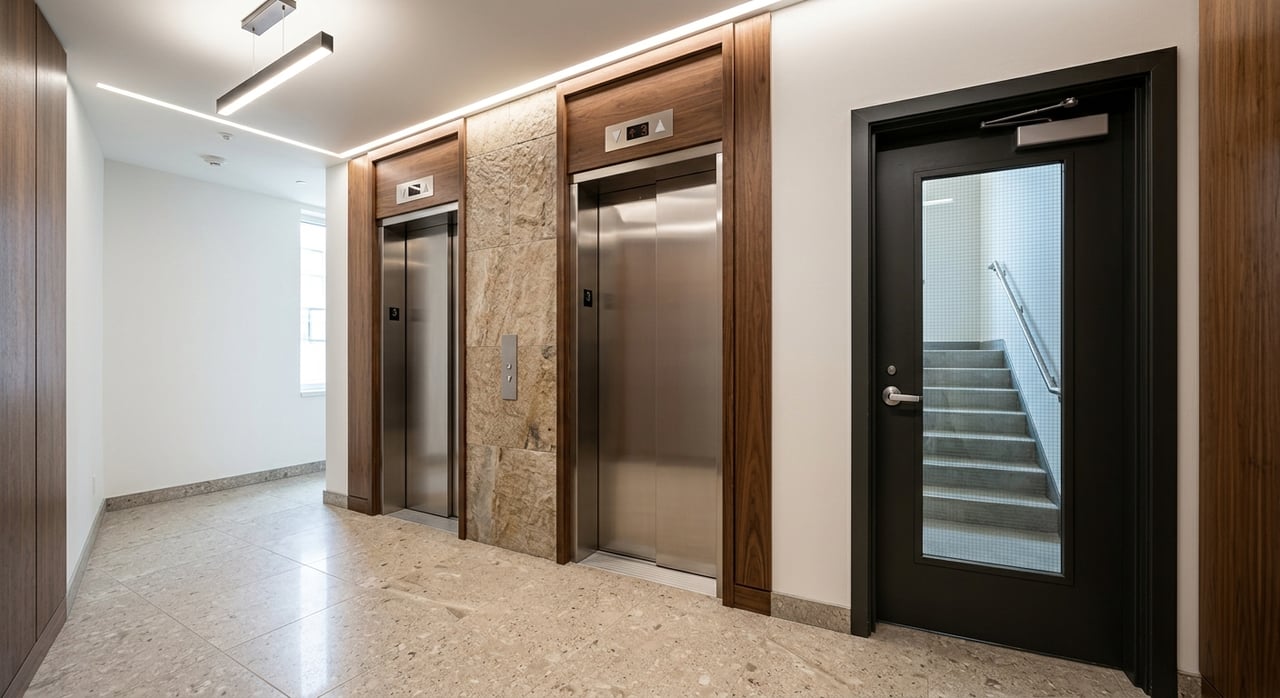
If you are apartment hunting in Beacon Hill, one question can shape your daily routine more than you might expect: do you want a walk-up or an elevator building? In a neighborhood known for narrow streets, historic buildings, and compact blocks, that choice affects everything from move-in day to laundry runs and grocery trips. The good news is that there is no one-size-fits-all answer, and understanding the tradeoffs can help you rent with more confidence. Let’s break it down.
Beacon Hill Rentals Start With the Building
Beacon Hill’s housing stock is part of what makes the neighborhood feel so distinct. The area is known for its historic street pattern, brick row houses, brick sidewalks, gas lamps, and narrow streets.
That character also shapes the rental market. RentCafe reports that 53% of Beacon Hill rentals are in buildings with more than 50 units, 46% are in smaller complexes, and only 0.6% are single-family rentals. In other words, many renters here are choosing between smaller older buildings and larger apartment houses.
What Walk-Up Living Feels Like
Walk-up apartments in Beacon Hill often appeal to renters who want charm, a smaller-building feel, and in some cases better light from higher floors. These homes can feel more connected to the historic fabric of the neighborhood, especially in classic row house settings.
Recent listings show what that can look like in practice. A 3rd-floor two-bedroom at 7 Anderson Street was listed at $3,200 and included in-unit laundry, a washer and dryer combo, a dishwasher, high ceilings, and professional management in a 10-unit building. A 5th-floor two-bedroom at 92 West Cedar Street was listed at $3,300 with building laundry and no elevator.
The main tradeoff is simple: stairs. If you choose a walk-up, you should think beyond the apartment itself and picture the everyday routine of carrying groceries, moving furniture, handling deliveries, and climbing multiple flights after a long day.
Walk-Up Pros
- Historic character
- Smaller-building atmosphere
- Potential for higher-floor light
- Often a more intimate living experience
Walk-Up Considerations
- Stairs are part of daily life
- Move-in can be more demanding
- Laundry may be in the building rather than in-unit
- Carrying packages and groceries can take more effort
What Elevator Living Feels Like
Elevator and concierge buildings in Beacon Hill tend to focus on convenience. The biggest difference is not necessarily style or price. It is how much daily friction the building removes.
Current listings show the range of features that come with elevator living. A one-bedroom at 21 Beacon advertised elevator access, 24-hour concierge, trash and laundry on every floor, and a common rooftop. A studio at River House, 145 Pinckney, included multiple elevators, a roof deck, private storage, a bike room, and on-site laundry. A one-bedroom at 10 Bowdoin included elevator and concierge service, underground garage parking, a storage unit, bike storage, and included building services and utilities.
If you value ease, elevator living can make a real difference. It can simplify groceries, deliveries, trash, laundry, and visits from guests who may prefer easier access.
Elevator Building Pros
- Easier access day to day
- Helpful for groceries, packages, and laundry
- Commonly paired with added building services
- May include features like storage, parking, or concierge support
Elevator Building Considerations
- Building style may feel less intimate than a small walk-up
- Amenities and bundled services vary by building
- Rent differences often reflect more than elevator access alone
Rent Is About More Than Stairs
One of the biggest misconceptions in Beacon Hill is that elevator buildings always cost more. Current listings suggest the market is not that simple.
For example, a 3rd-floor two-bedroom walk-up at 7 Anderson Street was listed at $3,200. Meanwhile, a 540-square-foot elevator and concierge unit at 21 Beacon was advertised at $2,400 with utilities included. On the higher end, a 719-square-foot elevator and concierge one-bedroom at 10 Bowdoin was listed at $3,450 with parking and storage, while a 700-square-foot 5th-floor walk-up at 92 West Cedar was listed at $3,300.
The pattern is clear: rent in Beacon Hill is shaped by a bundle of factors. Size, renovation level, light, laundry, storage, parking, and included utilities all matter. Stairs versus elevator access is just one part of the picture.
How To Compare Walk-Up and Elevator Options
If you are deciding between two Beacon Hill rentals, it helps to compare the full monthly value instead of just the asking rent. A lower rent in a walk-up may still come with tradeoffs that matter to your routine, while a higher rent in a full-service building may include features that save time and hassle.
Here are a few practical questions to ask as you compare listings:
- How many flights of stairs will you use every day?
- Is laundry in-unit, on the floor, or in a shared basement space?
- Are utilities included in the rent?
- Is storage included?
- Is parking available, and if so, is it included or separate?
- Are there building move-in rules or time windows?
- If there is an elevator, can it be reserved for move-in day?
Daily Life Matters More Than the Label
The best choice often comes down to your schedule and priorities. If you are frequently out, travel light, and love the feel of a smaller historic building, a walk-up may be a great fit.
If your routine involves frequent deliveries, heavier grocery runs, regular laundry trips, or a preference for easier access, an elevator building may feel more practical. In Beacon Hill, the right rental is often the one that matches how you actually live, not just what sounds best in a listing.
Beacon Hill Move-In Logistics Are Real
In Beacon Hill, move-in day deserves serious planning. The neighborhood’s narrow streets and tight curb access can make truck parking a challenge.
Boston’s Charles Street parking study found peak-demand occupancy of 97% on the east side of Charles Street and 99% on the west side. Adjacent side streets were recorded at 93% and 100% occupancy. That means available curb space can be extremely limited.
Boston’s moving-truck permit is one of the most important tools for a Beacon Hill move. A standard permit reserves two parking spaces for one day from 7 a.m. to 5 p.m. The city says online applications must be submitted 15 days to 8 weeks before the move, permits are usually mailed within 7 to 10 business days after approval, and signs must be posted at least 48 hours before the move.
The city also notes that the permit does not override snow emergencies, construction zones, accessible parking, or posted no-stopping, no-standing, or tow zones. Many residential streets are also resident parking only, and vehicles without a valid permit can be ticketed.
Move-In Checklist for Beacon Hill
- Confirm whether your building is a walk-up or elevator property
- Ask about move-in windows and building rules
- If applicable, ask whether the elevator can be reserved
- Apply early for a Boston moving-truck permit
- Post permit signs at least 48 hours before move-in
- Confirm legal truck access on your block before the moving day
Which Option Is Better for You?
There is no universal winner in the walk-up versus elevator debate. In Beacon Hill, both can offer strong value depending on the unit, building features, and your day-to-day needs.
A walk-up may be the better fit if you want character, a smaller-building setting, and are comfortable with stairs. An elevator building may be the better fit if convenience, bundled services, and easier access matter most to you.
The key is to compare the apartment and the building as a complete package. In a neighborhood as specific as Beacon Hill, small details can have a big impact on your rental experience.
If you want help comparing Beacon Hill rentals, understanding building differences, or planning a smoother move, Downtown Boston Realty can help you sort through the details and find a rental that fits your routine.
FAQs
What is the difference between a walk-up and an elevator apartment in Beacon Hill?
- A walk-up requires using stairs to reach the unit, while an elevator apartment offers lift access and may also include features like concierge service, shared amenities, storage, or easier move-in logistics.
Are walk-up apartments in Beacon Hill always cheaper than elevator buildings?
- No. Current Beacon Hill listings suggest rent depends on size, condition, light, laundry, storage, parking, utilities, and building services, not just whether there is an elevator.
What should you ask before renting a Beacon Hill walk-up apartment?
- Ask how many flights of stairs there are, where laundry is located, whether storage is included, what utilities are included, and what move-in rules apply.
What should you ask before renting a Beacon Hill elevator building apartment?
- Ask whether concierge service is included, what amenities come with the building, whether the elevator can be reserved for move-in, and whether parking, storage, or utilities are included in the rent.
How hard is move-in day on Beacon Hill streets?
- Move-in can be challenging because Beacon Hill streets are narrow and curb space is limited, so it is smart to plan early and secure a city moving-truck permit if needed.
When should you apply for a Boston moving-truck permit for a Beacon Hill move?
- Boston says online applications should be submitted 15 days to 8 weeks before the move, and permit signs must be posted at least 48 hours in advance.